
10 largecaps stocks which stand to gain from the Budget.

Reliance Natural Resources Ltd chairman Anil Ambani is understood to have sought a review of the government's decision, rejecting the sale of natural gas by RIL to it.

These 7 blocks are adding exploration acreage of 18,510 square kilometres spread over three sedimentary basins of India and have a resource potential of approximately 33 billion barrels of oil and oil equivalent gas.

ONGC takes Reliance to court, alleging years of stealing from its offshore block and a sleeping govt, right after it was agreed there would be a probe by experts.
The world's third largest oil firm Royal Dutch/Shell has offered state-run gas firm Gail (India) Ltd a 15 per cent stake in an offshore medium sized gas field in Egypt.
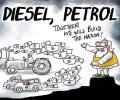
Union Petroleum and Natural Gas Minister Hardeep Singh Puri on Monday said India is the only country where rates of petrol and diesel have come down between November 2021 and April 2024. Replying to various queries during Question Hour in Rajya Sabha, the minister also informed that the government is encouraging dialogue between Oil Marketing Companies (OMCs) and dealers regarding margins for the latter. Puri noted that petrol and diesel were deregulated during the UPA government.
You will now have to pay more for electricity, piped cooking gas, and taxi, autorickshaw and bus fares because of the hike in gas prices.
Australia's Oilex on Monday said it has made huge natural gas discovery in Gujarat that may hold over 1.5 Trillion cubic feet of recoverable reserves. Industry estimates put the total resource base or inplace reserves in the Cambay basin discoveries near the town of Khambat, 160-km south of Ahmedabad, at between 20-30 Trillion cubic feet, almost equivalent to inplace reserves of Reliance Industries' eastern offshore KG-D6 fields.
In a letter to the state principal secretary (energy and petrochemicals) S Jagdeesan on September 4, RIL executive director PMS Prasad said NTPC is currently buying natural gas on spot basis, which could potentially increase the cost of power by about Rs 1,500 crore.

In its third video uploaded on YouTube, RIL said the Cabinet had decided on June 27, 2013, to revise natural gas prices for public and private producers from April 1 and notified the decision on January 10, about two months before the schedule for general elections was announced on March 5.
ONGC Videsh, the overseas arm of state-owned Oil and Natural Gas Corporation, is seeking to regain operatorship of offshore gas block in Vietnam, which started gas production last month.
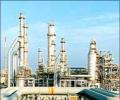
State-run NTPC Ltd is likely to sign by month-end an agreement to buy natural gas allocated by the Centre from Mukesh Ambani-run Reliance Industries Ltd at government-approved rate of $4.20 per mmBtu, power secretary H S Brahma said on Wednesday.

State-run gas utility GAIL India Ltd buys 0.9 million standard cubic meters per day of output from Ravva Satellite fields at $4.30 per mmBtu. The new price sought by the Ravva consortium is 60 per cent more than the maximum price of $4.20 per mmBtu approved for RIL's KG-D6 fields for five years to March 2014.
There is no payment problem for Russian crude, Petroleum and Natural Gas Minister Hardeep Singh Puri said on Wednesday. He said there is no proposal to cut retail fuel prices at the moment. Addressing a press conference, the minister said India enjoys a buyers' position and foreign suppliers are approaching Indian companies with offers to sell oil.
"Our gross billing in October-December quarter was $ 89.13 per barrel, as compared to $ 76.66 a barrel in the corresponding quarter of the last fiscal," a company official said.

Megha Engineering and Infrastructure, the little-known Hyderabad-based firm that in recent years won the prestigious Zojila tunnel deal among other projects, forayed into city gas and acquired a media group, was the second largest donor to political parties using electoral bonds.
The government recently announced a new formula for determining the price of natural gas, lowering it from $8.4 suggested by the C Rangarajan committee.
Reliance Industries has put the cost of producing natural gas from its prolific Krishna Godavari basin fields at $2.9 per million British thermal unit and the firm will earn a pre-tax return of 13 per cent.

India's crude oil production fell 2.15 per cent in October as state-owned firms produced less but, natural gas output rose by a quarter on the back of output from KG-D6 fields of Reliance-BP, government data released on Tuesday showed. Crude oil production dropped to 2.51 million tonnes in October, as output from fields operated by Oil and Natural Gas Corp (ONGC) and Oil India Ltd (OIL) dipped. While ONGC produced 4 per cent less crude oil at 1.64 million tonnes, OIL output dropped 1.46 per cent to 2,53,000 tonnes.
Iran said it hoped all aspects of a $7-billion pipeline to transport natural gas from the country to Pakistan and India would be finalised in next two months.
State-run Oil and Natural Gas Corp will invest around $15 million in developing Chinnewala Tibba oil and gas discovery in Jaisalmer district of Rajasthan.

The Delhi high court has rejected a government challenge to an arbitration panel award that had ruled in favour of Reliance Industries Ltd in a dispute over gas migration from fields operated by state-owned ONGC in the KG basin. The government had slapped a provisional penalty of $1.55 billion on Reliance for "unjust enrichment" from gas migrating from the ONGC-operated KG-D5 block to the private firm's adjoining KG-D6 area. It had sought $175 million in additional profit petroleum from Reliance and its UK partner BP Plc.
GAMES-TOURISM Tourism industry asked to cash on C'Wealth Games New Delhi, Aug 19 (PTI) With over one lakh foreigners expected to throng the city during Commonwealth Games, tourism industry must gear up to reap the benefits, Tourism Minister Kumari Selja said today.
ONGC Videsh Ltd, the overseas investment arm of India's largest oil producer Oil and Natural Gas Corporation, is planning to bid for a "few" of the 19 exploration blocks being offered under two bidding rounds by Iraq, which has the world's third-largest oil reserves.
Iran says it is confident that the proposed "peace pipeline" project to transfer natural gas from the rich Iranian fields to Pakistan and India will be constructed once the negotiations between New Delhi and Islamabad are concluded.
The company has already received an approval to spend Rs 50,000 crore (Rs 500 billion) for commercialising two of its biggest gas discoveries in the D6 block located in the KG basin. "In a letter to oil regulator Directorate General of Hydrocarbons, the company has submitted one more development plan for Rs 10,000 crore as additional capex (capital expenditure) for the block.

Reliance Industries is ostensibly seeking a 25 per cent increase in the price of natural gas it produces from the eastern offshore Krishna-Godavari Basin after it wrote to the Oil Ministry saying it has customers willing to pay more than the government-approved price.
The board of Oil and Natural Gas Corporation has approved the investment of Rs 950 crore (Rs 9.5 billion) extract gas from below the coal seams in Jharkhand and West Bengal from June 2007.
Though crude oil prices in the market are at a record high and analysts say they could breach the $200-per-barrel mark soon, consumption has grown rapidly in India as prices of petrol, diesel, kerosene and liquefied petroleum gas are heavily subsidised by the government and its oil production and marketing companies. Higher demand, coupled with higher prices, is also likely to drive up the country's oil import bill to over $100 billion in this financial year.
RIL and its partners BP plc of UK and Canada's Niko Resources plan to produce about 13 million standard cubic metres per day of gas for 13 years from D-34 discovery, known as R-Cluster, in the KG-DWN-98/3 or KG-D6 block by 2017-18.
Differences over the price of natural gas to be imported through the Iran-Pakistan-India pipeline persisted on Friday, but the three countries agreed to appoint an international consultant to look into the issue.
Royal/Dutch Shell on Friday said its $600 million liquefied natural gas import and regassification terminal at Hazira will be commissioned in the second half of 2004 and hoped to make available gas at very competitive price by the year end.
The over $7 billion Iran- Pakistan-India gas pipeline project has been found to be technically feasible but its economic viability will depend on the price at which Tehran sells the fuel, the Centre said on Tuesday.
Oil and Natural Gas Corporation and Mukesh Ambani-controlled Reliance Industries may tie up to build a common gas processing unit as the two firms have discovered huge reserves in the Krishna-Godavari basin
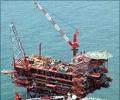
Reliance Industries has said that it had in December 2005 signed a contract to sell natural gas to NTPC at $2.34 per mmBtu price for 17 years, but it was the state-run firm that did not reciprocate.

The output of eight core infrastructure sectors grew 3.3 per cent in August -- the lowest in nine months -- as against 12.2 per cent in the year-ago period, according to official data released on Friday. The previous low was in November 2021 at 3.2 per cent.
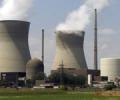
Reliance had in 2006 won government nod to invest $8.836 billion in Dhirubhai-1 and 3 fields in KG-D6 block after promising an output of 61.88 million cubic meters a day from 22 wells by April 2011 and 80 mmscmd from 31 wells by 2012.
The pricing of natural gas will be discussed by the group of ministers concerned on January 29, Union Petroleum Minister Ram Naik said on Wednesday. \n\n\n\n
